

We Are All Wall Dancers Now
A conversation with Yi-Ling Liu about "The Wall Dancers," her new book on the Chinese internet. We discussed freedom, control, living within truth, and what happens when the walls rise everywhere

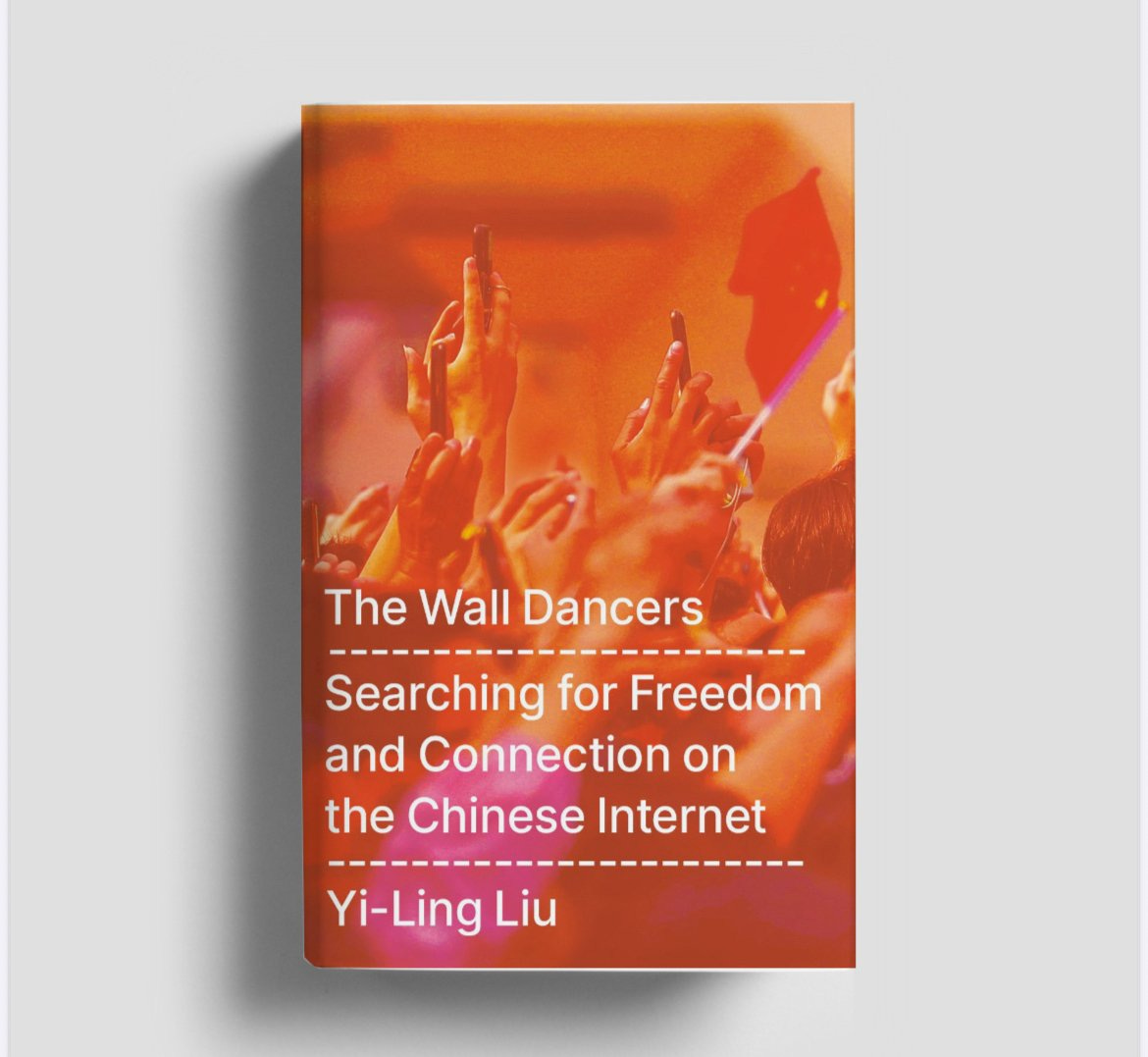
If there’s any book I’ve been anticipating for years, it would be this one: The Wall Dancers: Searching for Freedom and Connection on the Chinese Internet, written by Yi-Ling Liu, a friend and a role model. She writes about a Chinese entrepreneur who runs the world’s largest gay dating app and once shook hands with Premier Li Keqiang (now deceased). She writes about how GitHub became an information haven during COVID censorship. She writes about the hyper-growth and malaise of TikTok: a global company both blessed by realized ambition and cursed by geopolitics.
If there’s a converging theme, Yi-Ling’s work always returns to technology and political participation in China, a place long portrayed by familiar discourse as internet’s aberration; Chinese internet is a prison, not the free, equal, and luminous internet we were promised! Yet by 2026, that discourse had aged poorly. The internet and tech world we now inhabit increasingly resembles China’s in its inner logic and ultimate purpose, not the other way around. Look at how US-owned TikTok censors content, a familiar playbook for Chinese internet natives.
The West lost its innocence toward technology some time ago, only to realize belatedly that it must learn a few lessons from Chinese netizens: how to seek freedom and connection within tech plutocracy, in an algorithmic age. This book arrives precisely when we need it.
The following discussion is between Yi-Ling Liu and I, about her upcoming new book, The Wall Dancers: Searching for Freedom and Connection on the Chinese Internet. The book is available on Feb 03, 2026. You can use this LINK to order it.
Below, we chatted about:
Dancing in shackles: the core metaphor of the book
Choosing the dancers: why these five characters embody the Chinese internet’s evolution
The craft: how to bring the Chinese internet to life through human stories
Fàng and Shōu: The cycles of opening and closing
Can the dance continue? Technology and activism in the AI age
The shrinking surface area of human connection
What the “China-maxxing moment” reveals about AmericaWhat readers should take away: China is not a monolith, and everyone must find their truth
Dancing in shackles: the core metaphor of the book
Afra: Your book is titled The Wall Dancers—a choice that still mesmerizes me every time I encounter it. Instead of words like “fighter,” “innovator,” or “dissent,” you chose something more artful and ambiguous to refer to those individuals navigating China’s transformation into both the world’s largest online user base and one of its most populous authoritarian states. You call them dancers. It captures not bitterness or resistance, but something closer to the real texture—the joy and hide-and-seekness. The artfulness of how people dodge the censors, the spark of recognition when you see a clever political meme slip past detection unscathed. There’s a kind of communion in that moment: I know you, you know me. You are a dancer, I am too.
So, what made you choose “dancer” as the defining identity for your protagonists in your book? And how does this metaphor capture what you call the “dynamic push and pull between state and society”?
Yi-Ling: Thank you for naming the joy and dynamism in that word—it’s exactly what drew me to it. The phrase “dancing in shackles” (dài zhe liàokào tiàowǔ) first appeared in the early 2000s, used by Chinese journalists describing what it meant to report under state constraints. Since then, it’s migrated everywhere: musicians named a song after it, Liu Cixin (China’s most famous science fiction writer, author of The Three-Body Problem) invoked it in his foreword to The Three-Body Problem, software engineers adopted it. It perfectly captures this idea that to live in China is to participate in something profoundly dynamic—swinging wildly between freedom and control, repression and liberation.
A dance requires agility, nimbleness. The people I profile had to navigate constantly shifting terrain, which is why I call them “wall dancers”—people skilled at pushing for dignity and connection on the Chinese internet, and in Chinese public life more broadly, within a system whose boundaries are always moving.
Choosing the dancers: why these five characters embody the Chinese internet’s evolution
Afra: That image of a moving wall is so apt. Anyone who’s on the Chinese internet knows it’s not some static brick structure—it chases you, becomes invisible, then reappears. The wall itself is dancing.
Let’s talk about your dancers. The book follows four main protagonists—Ma Baoli, founder of Blued, China’s largest gay dating app, Lü Pin, prominent Chinese feminist activist, Kafe Hu, an underground rapper from Sichuan, and Chen Qiufan, a science fiction writer and former Google employee—plus a fifth figure, Eric Liu, who embodies the Firewall itself as a Weibo censor. Each represents a different facet of the Chinese internet: Ma the entrepreneurial aspiration, Lü the feminist awakening, Kafe the artistic edge, Chen the elite tech worker, and Eric the apparatus itself. Why these particular facets? Were there other dancers you considered but ultimately didn’t include?
Yi-Ling: There were many. I considered people working in environmental movements and labor rights—both requiring their own intricate dances. But I wanted to focus on the margins, the underground, the subaltern. That’s where the most imaginative dances bloomed.
What’s crucial is that these people, though living on the margins, knew how to operate in the mainstream. Ma Baoli was a Chinese cop, the ultimate insider. Lü was a state journalist. Chen worked in one of the biggest tech companies. Even Kafe Hu, a rapper, ran a standard business in China. This ability to move between inside and outside made them both idealistic and pragmatic. They could code-switch and wear different masks. Ma, for instance, could speak the language of authority because of his police background, which proved essential to his survival.
The other thing that united them was shared personal stakes with me. I approached the hip-hop artists while finding my own place as a writer and artist under constraint. I sought out the queer community while coming to terms with whether I could love openly. I reached out to feminist activists during the pandemic because I wanted to understand what solidarity could look like under lockdown. Their stories became intertwined with my own search for how to dance.
Afra: I love that formulation: anyone living inside the Great Firewall is constantly asking themselves, How should I move? Even someone like Hu Xijin, the former editor-in-chief of the nationalist tabloid Global Times, and a notorious big mouth and pro-state influencer with 250 million Weibo followers, could be banned (he was, in fact, banned in 2024). Everyone is dancing.
The craft: how to bring the Chinese internet to life through human stories
Afra: Let’s talk about craft. Reading your book, I felt teleported back in time, inhabiting your characters’ bodies and minds. This sense of immersion is the fruit of painstaking labor—because in your prose, each character and their scenes, the eras they inhabit, and those atmospheres that elude rational language, all come alive on the page. This immersion, this time travel, is rare and precious.
One example would be when I read about Ma Baoli discovering the online novel Beijing Story by Beijing Comrade (a pseudonymous gay writer whose 1998 novel became a touchstone for a generation of Chinese queer men), that single sleepless night devouring it, the moment that changed his life’s trajectory—I felt I was right there with him. When feminist activist Lü Pin quit her job saying, “I’m the generation of 1989,” I recognized her immediately. That line is exactly what Lü would say. You captured her temperament.
How did you weave so many details together? How did you gather these primary sources? What was your process of writing such a big project?
Yi-Ling: Before approaching any subject for the book, I’d spent months or years researching their worlds and writing about them. I came to these interviews with enormous background knowledge. With Ma Baoli, for instance, I became interested in gay-dating app Blued back in 2018-2019 and wanted to write about it for The New York Times Magazine. He declined to be interviewed. So I did what Gay Talese, the legendary American journalist and pioneer of “New Journalism,” did when Frank Sinatra refused to talk: I interviewed everyone in his orbit: Blued employees, queer community members, investors. A year later, after that piece published, I reached out again for the book. He agreed. I think seeing all that contextual work mattered.
Most of these people are quasi-public figures who’ve shared their stories online, on social media, in videos. No one had woven those fragments into a coherent narrative. I wasn’t doing investigative journalism, uncovering hidden scoops. I was taking dispersed pieces and breathing life and color into them.
That scene of Ma discovering Beijing Story? He’d told that story hundreds of times in two sentences. Every time I heard it, I thought: What would it be like to recreate this scene in its full entirety? So I had him walk me through it multiple times. Where was the internet café? Where were you sitting? Who was the girl next to you? When did you walk out? Filling in those details, bringing it to life.
Then there’s the larger architecture—weaving individual stories into the broader narrative of the Chinese internet’s evolution. I interviewed dozens of people across each realm. For hip-hop alone, I spoke to at least a dozen artists beyond Kafe Hu, plus gatekeepers who understood the industry. I have a massive Google spreadsheet tracking everyone. The most intensive part was bringing their stories to life with emotional and visual specificity.
Afra: Which moments made the most profound impression on you?
Yi-Ling: So many. With Ma, there’s one he rarely discusses: later in life, he had this recurring dream that he’d returned to the police bureau but couldn’t find his office. That dream moved me enormously—the feeling of being rooted in a role and place, then uprooted, not knowing who you are anymore.
Kafe Hu deciding to move to Chengdu resonated deeply. Any young person saying, “I’m done with this small town, I’m going to the city to chase my dreams” is a universal yearning.
Afra: There are some moments that perhaps encapsulate a whole generation’s nostalgia: Ma meeting Premier Li Keqiang, shaking hands, receiving state endorsement for Blued. That feels like a time capsule now, something you can’t quite believe happened in China. Like those CCTV clips about LGBTQ organizations being established in various regions. Forever gone.

Fàng and Shōu: The cycles of opening and closing
Afra: That leads perfectly to my next question. This early period of the Chinese internet—steamy, chaotic, prosperous—feels like a past life even to those of us who lived through it. But this mirrors the West. We had a much more hopeful vision of technology twenty years ago. I’ve met Tim Berners-Lee twice during Dweb Camp, and each time we discuss what’s happened, he says he never predicted this outcome when designing the World Wide Web protocols.
You write about China’s cyclical pattern of fàng and shōu (opening and tightening), but note that this time, this shift takes place amid a global technological turn—from the early promise of a free and open World Wide Web to one that has become closed, siloed, and commoditized. How did we get here?
Yi-Ling: I’ll try to be succinct, with the caveat that I have no complete answer. History’s twists resist prediction.
Maybe the real issue is that we were naive to accept this teleological arc—technology equals liberation—as inevitable. Bill Clinton saying that controlling the internet was like “nailing Jello to the wall” seems almost quaint now. The tension between freedom and control, decentralization and centralization, is perpetual. We’re the ones with agency to push it back toward democratization and liberation.
From the Chinese perspective, you see this fàng-shōu (opening and tightening) cycle throughout modern history. The Cultural Revolution’s repression was followed by reform and opening. The freewheeling late ‘80s ended with Tiananmen. The Weibo Spring of 2013—that blooming of discourse—was followed by tightening. When systems open too quickly and destabilize state power, authorities reassert control. When control becomes too rigid, pressure for reform builds.
China’s relationship with tech entrepreneurs illustrates this perfectly. The mid-2010s was vibrant—ByteDance being founded, VCs flooding the ecosystem, the Party emboldening founders to build boldly. Then 2020-2020: Jack Ma’s Ant IPO pulled, the big tech crackdown, Common Prosperity campaigns. We’re still in that closing cycle, though there are micro-openings around AI.
But this sits within a global authoritarian shift. The 2008 financial crisis disillusioned many about Western liberalization. The Arab Spring’s failure showed regimes that digital tools could serve repression, not just revolution. Snowden’s 2013 revelations about NSA surveillance shattered illusions about technology and freedom. And 2016—Trump’s election, Brexit—proved that even in democracies, social media could be manipulated to influence opinion.
So we’re seeing this domestic Chinese tightening arc within a broader global authoritarian turn, the two mirroring each other. The so-called “free” internet and the one behind the Great Firewall have started to resemble each other, converging.
Can the dance continue? Technology and activism in the AI age
Afra: A significant part of your book examines how technology reshapes activism—the Weibo Spring, the feminist movement, #MeToo (disguised as “rice bunny,” 米兔, a homophone in Chinese that allowed the movement to evade censorship), the White Paper protests. Even as surveillance grows more sophisticated, people find new ways to express dissent. Playing “boundary ball” (cā biānqiú, a table tennis term meaning to hit the ball at the edge of legality), inventing entire lexicons to evade censorship. For me personally, my first Chinese-langauge podcast Loud Murmurs came together as a result of that era. That moment injected me and my co-host with a clear consciousness of what it means to be a woman, what it means to interact with complex online contexts, and how to establish our voices.
Can this dance continue in the age of AI? How do we preserve space for dissent when algorithms on platforms like Xiaohongshu are designed to tame and pacify?
Yi-Ling: I’m torn between optimism and pessimism. On one hand, when new technology emerges, there’s a flourishing phase—decentralization, creativity, people using it in unexpected ways. That allows for innovation, dissent, dancing.
On the other hand, I’ve spoken with Chinese startup founders and AI lab researchers who point out that AI platforms are built on top of the internet. If internet platforms are already siloed and centralized, building AI on that infrastructure, like constructing a building on ByteDance’s foundation, means power remains concentrated in a few hands. Whether AI will create the same space and dynamism for pushback as the late-’90s internet did? I’m skeptical.
But I want to believe in ordinary people’s creativity and ingenuity. Even “vibe coding,” this experimental tinkering with systems, could be promising if people innovate in ways those in power haven’t anticipated.
What’s radical, though almost sad that it’s radical, is simply the ability to think for yourself. Having a sense of self not shaped by algorithms—that’s already a deeply radical act.
The shrinking surface area of human connection
Afra: I keep thinking about the gradual sense of isolation, how our surface area for connecting with other people decreases over time. The early Chinese internet had those chat rooms where 500 strangers would gather without a specific topic, just curious about each other: You’re from Hebei Province? I’m from Guangdong Province! We’re so far apart but we’re talking—how are you? What’s your life like? That yearning to connect.
Later, the internet became about connecting only with friends and family. WeChat and Instagram went more and more private. Now we’re talking to chatbots. I think collective political action—protest, activism—requires curiosity and sympathy and interdependence for others. If you’re suffering like I am, we’re comrades. We’re a community. But AI reduces that surface area. Public grievances become private, channeled into AI conversations.
I also worry about the triumph of individualism. AI gives immense agency—designers no longer need product managers or engineers, product managers can work without designers or engineers, engineers are eager to bypass both. Everyone’s AI-ing each other out.
Yi-Ling: It’s bleak. What you’re describing—people losing contact with one another, losing what Hannah Arendt called “common sense,” literally losing connection to each other’s bodies. She said loneliness is the root of totalitarianism. When you’re not connected to other people, control becomes easier.
What the “China-maxxing moment” reveals about America
Afra: Let’s shift to something more zeitgeisty: the “China moment.” In 2025, young Westerners are calling themselves Chinese, declaring “I’m China-maxxing,” “This is a very Chinese moment of my life.” Not to mention TikTok refugees flooded Xiaohongshu, Labubu went viral, and Chinas’s achievements in AI. Many people are seriously discuss whether this is the Chinese century.
Your book traces three decades of the Chinese internet’s evolution. After all that reporting, what’s your take? Are we entering the Chinese century? And what does that mean for the dancers and the core themes of your book?
Yi-Ling: I’m glad you’re asking this because it’s come up constantly. It’s a relatively new phenomenon, emerging after I finished the book, so I’ve been thinking about the connections.
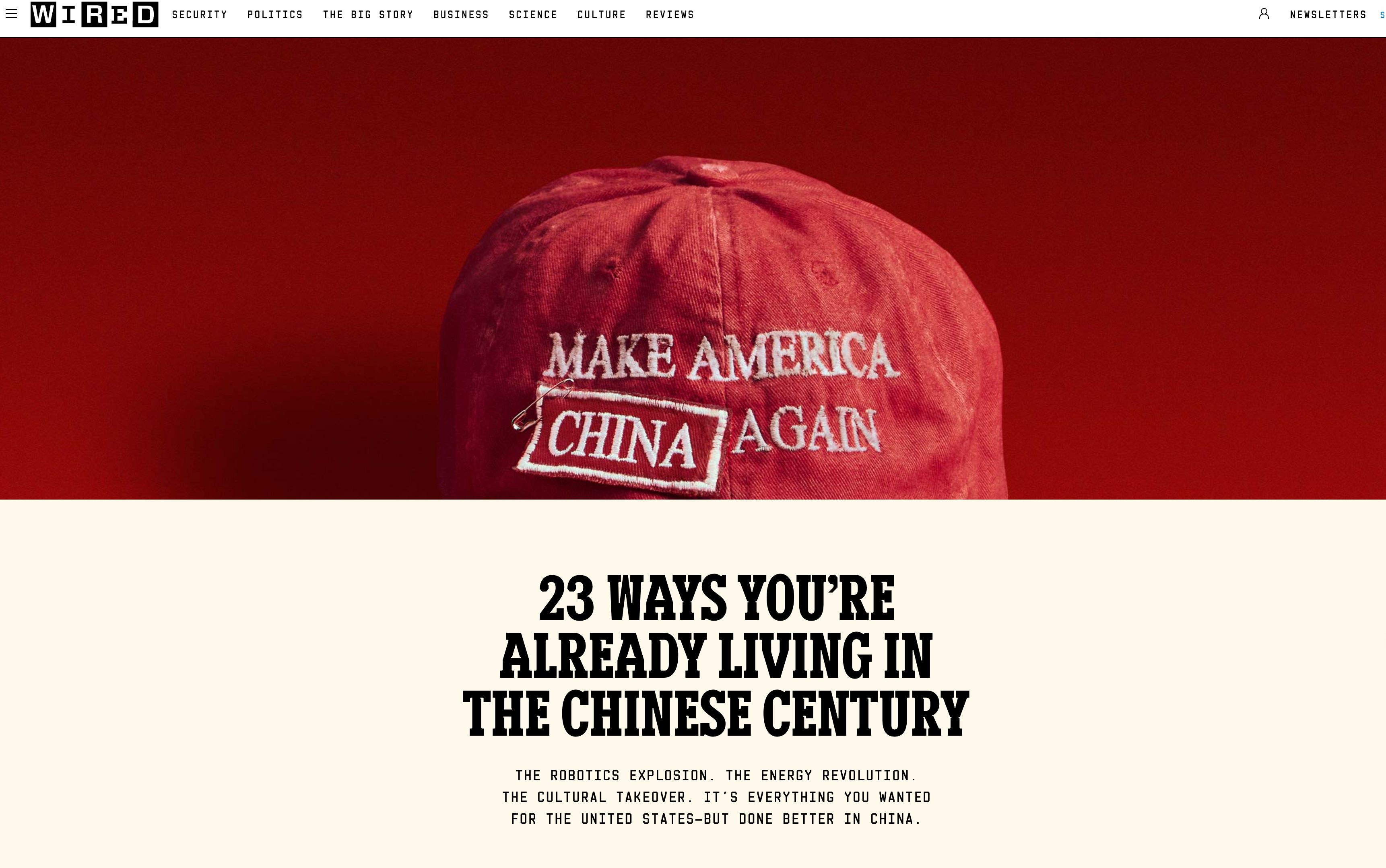
Kaiser Y Kuo wrote “The Great Reckoning,” and then you wrote “Another Reckoning with China,” Louise Matsakis and Zeyi Yang published an excellent Wired piece on China-maxxing. The turning point was probably last January, Xiaohongshu’s TikTok refugees, then DeepSeek’s release. It started with the chattering class—Silicon Valley tech bros making two-week trips to China and returning amazed: “I rode in a Huawei car with screens everywhere!” “Those dancing robots!” “The high-speed rail!” Now it’s entering mainstream cultural consciousness through influencers like Hasan Piker and Johnny Somali visiting China.
But here’s what’s crucial: this discourse reveals nothing about China in particular. It reveals everything about America. My friends in China say their lives haven’t radically changed in 2025. It’s entirely a shift in American perspective.
China has become a projection, a mirror onto which Americans project their fears and desires. The narrative used to be “China is this bad place we cannot be”—demonization. Now it’s flipped to “China is a perfect utopia”—idealization. The U.S. is obsessed with its own dysfunction, its inability to build physical infrastructure. Americans have finally noticed that China has been building bridges and buildings for decades.
Gary Zhexi Zhang wrote an essay that perfectly captures this:
The new orientalism is not like the last; Americans discovered that the alien empire on the other side of the ocean might be a lot like us after all—a technocapitalist society bent on growth, fed on slop, worked to the bone—except their OS seems to be functioning, at least by contrast.
Are we entering the Chinese century in terms of sheer physical output—EVs, humanoids, bridges, internet products like TikTok and Temu expanding globally? Probably. But what’s clearer to me is that we’re entering the American century of humiliation.
Strip away the projections and the Chinese and American internets look remarkably alike. We’re witnessing the rise of illiberal voices, the contraction of the public sphere, the erosion of common sense—literally losing connection to each other. We’re seeing centralization of power as political leaders and CEOs take over digital space, extracting our attention for influence. In China, tech CEOs and the Party have long worked together as collaborators. Now basically all of Silicon Valley is kowtowing to the Trump administration.
One big takeaway I didn’t fully grasp until finishing this book: Americans are going to have to learn to be wall dancers, too.
Afra: That’s profound. When they discuss tricking the X algorithm to avoid shadow ban, when they freaked out about TikTok censorship, that’s already dancer energy.
How you describe the American obsession with China reminds me of how I grew up in China with America as this unrealistic beacon, a projection of hopes and aspirations. Did Chinese people really care about everyday American life? No. They were inspired American’s futuristic aspirations, higher institutions, liberalism, freedom, personal heroism. That America shaped the Ma Baoli generation, the entrepreneurial generation, and contributed enormously to China’s current dynamism.
I think most Americans having a “China moment” don’t really care about real China. It reminds me of Jia Zhangke’s films—those surrealistic moments where a UFO departs Earth or a robot walks by, but these spectacles never connect to the main characters’ storylines. The UFOs, the robots, the high technology remain in the background, irrelevant to the people in the film. There’s a giant separation between what I call “Cool China”—exaggerated by Western media—and real China, which remains the same.
Yi-Ling: Exactly. That’s why I’m torn about this wave of Silicon Valley tourists visiting China. If the purpose is deep engagement, genuine understanding, curiosity about real China—I’m all for it. But if it’s to extract superficial takeaways like “China is good at building bridges” without historical context and deeper meaning, it gets memeified. It becomes a boilerplate policy prescription in some random document.
What readers should take away: everyone must find their truth
Afra: One last question: In a dream scenario, what meaningful takeaway do you want readers to have after finishing your book?
Yi-Ling: For the basic, non-China-literate reader: China is not a monolith. Understand the place through real human stories. Too often from the outside, China gets reduced to simple binaries—either an economic juggernaut of boundless opportunity or an omnipotent authoritarian state where no one has agency. We vacillate between these polarities, stripping people of their complexity and contradiction. One individual’s story can access that richness.
The other takeaway: everyone can find their own way to, as Václav Havel put it, “live within the truth.” Everyone can carve out a small space of dignity, freedom, and integrity. It might be tiny, it might be large. But within increasingly sophisticated technological systems, finding out how to do that for yourself is crucial.
Afra: Yelling “China is not a monolith!” is something our communities have been doing forever. Just like right now, to Chinese internet users, America is a monolith of dystopia—guns everywhere, murders, homelessness, fentanyl addiction and unaffordable hospitals. America is where middle-class people can instantly drop into hell if they get sick.1 Well, I would yell to the Chinese doomscrollers that America is also not a monolith.
Well, Yi-Ling, thank you. This conversation has been illuminating.
Yi-Ling: Thank you, Afra. I’m honored you read the book so carefully. This conversation was a gift.
Recently, Chinese people have been obsessed with the so-called Kill Line in America, a term that depicts the horror of poverty, “a fatal threshold beyond which recovery to a better life becomes impossible,” as NYT’s Yuan Li puts it.
This piece shifted my thinking on AI. I used to assume it would only help dictators control populations. But when everyone can use AI to code and create, it lowers the barrier for each "wall dancer" to find creative, collective ways to fight the Leviathan. The tools that concentrate power can also disperse it.
Also loved the conclusion: we need to see China dialectically, not as a flattened binary. And Yi-Ling is right that cultivating independent thinking and agency is the hardest part.