

The Center and The Periphery
I wrote a piece about jailbreaking iPhones as a teenager, LLM distillation, Huaqiangbei, Charles Dickens, Henry Ford, and the spirit that lives between copying and creating

When I encountered the word “jailbreaking” again in 2023, it took me a moment to realize it no longer meant what I remembered. For teenagers coming of age today, it has nothing to do with Apple’s iOS—it refers to circumventing the safety architecture of large language models. Though even that definition is already aging. The prompt injection methods that circulated on Reddit a year or two ago, once so clever, have been overtaken by the very systems they sought to outwit. The most hacker-minded people I know (perhaps just millennials, I realized Gen-Z aren’t interested in jailbreaking at all)?—have gone quiet. Fast-moving AI keeps lapping them, and jailbreaking AI no longer carries the same thrill.
And yet I found I couldn’t quite let the word go. Something in it still felt warm to me. I thought of my high school years in northern China, which were long in the way Chinese high schools tend to be long, and pressured in the ways they tend to be pressured. There were breaks between classes. During those breaks, we teenagers broke into our precious, expensive, novel iPhone 4s.
So I wrote a piece about it, partly for nostalgic reasons, partly to probe the nature of innovation itself.1 This essay has just been published in The Ideas Letter. The piece situates itself within larger questions that many great minds behind books have explored: whether actions like jailbreaking, copying, imitation—even something that shades into plagiarism—might be a less disreputable part of how technological innovation emerges than we generally like to admit. W Brian Arthur’s 2009 classic The Nature of Technology tells us:
Invention is a matter of problem solving—meeting needs—by putting together or combining existing pieces, and solving and re-solving the issues that arise along the way.
Writing this piece meant returning to early 2010s China, to the long winters of Taiyuan and my formative years juggling Gaokao, SAT, Twilight, and iPhones. The nascent era when companies like Xiaomi were just starting. When my high school had moved into a vast new suburban campus where the front road hadn’t been paved yet. When the country was mid-transformation in ways that were technological and physical at once, not always distinguishable from each other.
This piece is also, I’ll admit, somewhat self-serving. I find myself feeling an unwanted shame when reading headlines like “Chinese AI labs distilling our models”—then immediately remembering my high school self, excited and urgent, jailbreaking every iOS system I could reach. That hungry leapfrogging state is hard to suppress with warnings that “you’ve crossed a line.” I felt that hunger. I wanted to make the connection clear.
I also touch upon Charles Dickens—a recent preoccupation of mine, and a documented casualty of what I’ve started calling Yankee innovation. The connection will make sense when you read it.
The first few paragraphs follow. The rest is at The Ideas Letter:
The Center and The Periphery
The summer I started high school in Shanxi, I learned that the world had a new texture. It was the early 2010s and I held in my hand for the first time an iPod Touch. I still remember dragging the unlock bar across the screen. The gesture was new—the whole paradigm of touch was new—and the device responded with a light, precise click, a sound as clean as some cosmic voice. I was holding a piece of the future in my hand, and the future had been designed somewhere else.
Apple had reached a particular kind of peak in China that inspired almost religious devotion. A notorious story that still lingers in people’s minds is that of a teenager who exchanged a kidney for an iPhone. (Even in 2026, “one kidney” remains an ironic term for an iPhone.) While the students in my high school weren’t trading their organs for iPods, those little devices conferred something much more important than a kidney: status. Roughly half the students carried iPods; the other half had feature-rich Nokias. I had both: Nokia N79 and iPod Touch, a hedge and a devotion.
The highest-status students were invariably from privileged families. Crucially, they were also tech-savvy, owning the latest Apple products and possessing the ability to jailbreak devices for themselves and their peers. In a province that didn’t have an official Apple Store yet, owning an Apple device was a symbol of worldliness, extending one’s status beyond the locality. This was also the era when America was still, unambiguously, China’s technological North Star.
Looking back, 2011 feels like a hinge moment. The mobile internet age had just begun. Xiaomi’s founder Lei Jun delivered a prophetic speech that has since passed into tech folklore. Xiaomi—an enormous consumer electronics corporation—had just celebrated its first anniversary, and Lei Jun stood before a small audience in Shenzhen and said: Apple is five years ahead of the market. The only question worth asking was how Xiaomi could claim a place in the future Apple had created, rather than disappearing into it the way Nokia and Motorola already were.
Back then, students exchanged Apple jailbreak tutorials the way they swapped exam prep notes. Once jailbroken, the whole world opened: pirated games, paid software, colorful customized icons, everything the App Store contained but priced out of reach. Between classes we played paid Doodle Jump or Fruit Ninja and competed obsessively for high scores, the leaderboard a minor social order running parallel to academic rank. Under the immense pressure of the Gaokao (China’s exacting national examination for all undergraduates), our little 30-min hacker-house subculture became a liberating escape.
The word itself deserves attention. In Chinese, jailbreaking was translated with unusual fidelity: 越狱 (yueyu)—to cross out of prison. The concept arrived in the language already carrying its moral charge. A jail implies a jailer. A break implies the confinement was unjust. In that era, jailbreaking was a no-brainer. Apple’s closed ecosystem, combined with the near-impossible cost of paid apps relative to a middle-income family’s budget, had created a moral situation with an obvious answer.
It helped that we had a ready mythography. Prison Break, a TV show of five seasons, was enormously popular in China—and loved in my high school. The protagonist Michael Scofield engineers an elaborate escape to rescue his innocent brother from prison, framed and condemned by corrupt politicians reaching all the way to the Vice President’s office. The wicked elite had built the system. The system had imprisoned the innocent. The only recourse was technical ingenuity in the service of justice. I was fifteen. My Apple device was innocent. The closed ecosystem was the apparatus. Who could resist this?
……click HERE to keep reading.
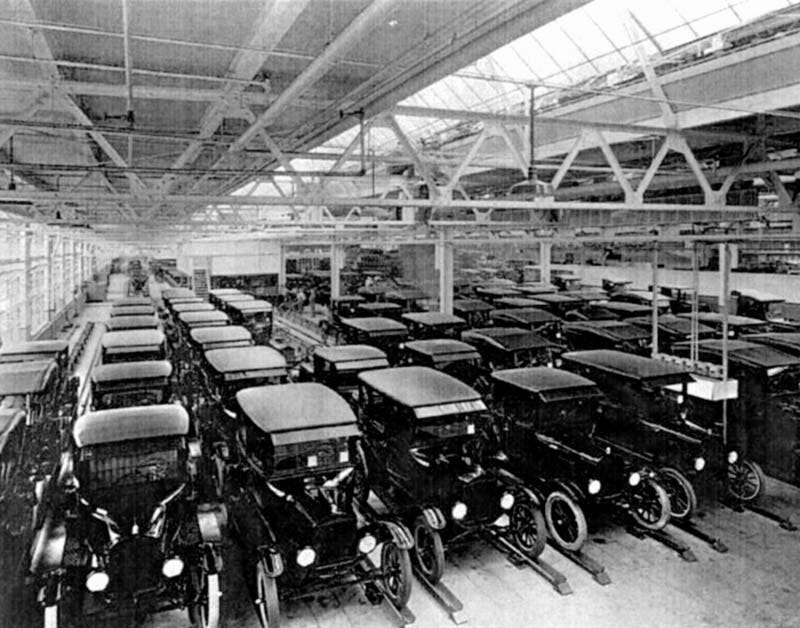

>Is jailbreaking, copycatting, and distilling uniquely Chinese? I am not entirely sure whether I have been assembling this history in order to understand it, or in order to feel better about myself—to find, in the sweep of industrial precedent, some retroactive absolution for a teenager who jailbroke her phone and felt righteous about it. The shame is real and specific. It still arrives reliably whenever a headline announces that a Chinese company has stolen something. I feel it on behalf of people I don’t know, for acts I didn’t commit, through some mechanism of collective guilt I have never fully reasoned my way out of.
we did it too! for years after the iphone came out in the usa, they were carrier-locked to at&t because of an exclusively agreement. I worked at a used phone store at the time, and our best business by far was buying these iphones, jailbreaking them (for free app stores), and then unlocking them (for use on other carriers) to sell to americans who wanted to use tmobile, or european tourists looking to use them back home
This is such a personal piece. It brought me straight back to Zhongguancun in the 2010s. It was exactly as you described—chaotic but eye-opening. China was cranking out electronics at the time, and you could find almost anything in the market. I really appreciate your perspective. It’s definitely fresh; even for those of us who lived through the era, we rarely take a step back and re-evaluate it like this.
“The shame is real and specific. It still arrives reliably whenever a headline announces that a Chinese company has stolen something. I feel it on behalf of people I don’t know, for acts I didn’t commit, through some mechanism of collective guilt I have never fully reasoned my way out of.”
This feels very true at the moment. There's pride in what's being built now in China that people want to move away from the old stereotypes. We're all hoping to witness more ingenuity. Yet, as you pointed out, ideas don’t exist in a vacuum. They need to be shared, exchanged, and evolved to mature. In an era of open-source models, expanding that shared knowledge pool feels like the natural next step for societal evolution. And even though I can't exactly offer justification for every instance of piracy, your article certainly provides a new framework to understand "why" this situation exists. And perhaps, as usual, we’re giving China too much heat.
I really enjoyed your writing. It’s very intimate and touching, and it spoke to me on a personal level.